How to Move and Store Your Gym Equipment – Practical Tips

November 25, 2025
15+ Years Serving NYC
4.9 Google Rating
24/7 Availability
Moving gym equipment isn\’t like moving furniture. It\’s heavy, awkward, and often delicate in ways people don\’t expect. A treadmill might look solid, but one bad lift or loose cable can ruin the motor. A set of dumbbells might seem simple until you realize how much weight you\’re dealing with once everything\’s boxed up. Whether you\’re moving across town or to another state, planning matters. Here\’s how to do it safely, efficiently, and without losing your back\—or your investment.
1. Take Stock Before You Touch Anything
Start with an inventory. Write down every item: treadmill, stationary bike, dumbbells, bench, squat rack, resistance bands, mats, mirrors. Take pictures too. This helps you plan the truck space and makes setup easier later.
Check each item\’s condition before you move it. Tighten bolts, remove batteries, and look for loose parts. If something\’s already damaged, note it. You don\’t want to confuse a pre-existing crack with a moving mishap later.
For high-end or commercial-grade gear, check the manual or manufacturer\’s website. Many brands include specific instructions for disassembly or transportation.
2. Clean Everything First
Moving dirty gym gear can cause problems later. Sweat and dust can corrode metal, attract pests, or damage upholstery during storage.
Wipe down machines and benches with a mild cleaner.
Vacuum mats and padding.
Use disinfectant wipes on handles and touchpoints.
Let everything dry fully before wrapping it. Trapped moisture can lead to mold or rust, especially in long-term storage.
3. Disassemble What You Can
Most gym equipment is easier and safer to move in parts.
Treadmills: Remove safety keys, unplug power cords, and fold or detach the base if the model allows. Some machines require removing side rails or the console.
Weight Machines: Take off weight stacks, cables, and pulleys if possible. Keep nuts, bolts, and washers in labeled zip bags taped to the main frame.
Benches and Racks: Remove attachments, pins, and bars.
Free Weights: Pack dumbbells and plates in small, sturdy boxes or plastic bins so they\’re not too heavy to lift.
If you\’re unsure, call the manufacturer or check online manuals. The extra 20 minutes it takes to disassemble is worth it.
4. Use the Right Packing Materials
Proper packing materials keep your equipment from getting scratched or damaged.
Bubble wrap and moving blankets protect metal parts.
Stretch wrap keeps pieces from shifting or rattling.
Furniture sliders or dollies make heavy machines easier to move on hardwood floors without leaving marks.
Plastic bins are better than cardboard for weights or accessories\—they won\’t tear.
Avoid using old blankets or towels as padding for metal gear. They can trap moisture and cause rust.
5. Protect Your Floors and Walls
Home gyms often sit on basement or garage floors, but during a move, everything goes through tight hallways and door frames.
Use furniture sliders or rubber mats to move heavy items across floors.
Wrap corners and edges with foam or cardboard to avoid scratches.
Keep walls clear when carrying long items like bars or weight benches.
In New York apartments, narrow stairwells and elevators can make this tricky. If you\’re moving in or out of buildings in Manhattan or Brooklyn, you may need to schedule elevator use or protect the hallway under building management rules.
6. Get Help for Heavy or Awkward Items
Gym equipment is some of the hardest stuff to move alone. A treadmill can weigh over 250 pounds; a full squat rack even more. One wrong move can injure you or damage property.
Professional movers who handle gym equipment daily know how to disassemble, pad, and load each item safely. They also carry insurance, which protects your gear and your home.
If you decide to do it yourself, rent proper equipment: dollies, straps, ramps, and a truck with a lift gate. Never drag machines across floors or attempt to carry them without a clear path and enough people.
7. Plan the Truck Layout
Load heavier items first\—treadmills, racks, benches\—so they\’re stable against the truck wall. Use ratchet straps to secure them in place. Keep weight evenly distributed to avoid tipping.
Lighter items like mats, resistance bands, or yoga balls can go on top or in separate boxes. Never stack fragile electronics (like bike consoles or monitors) under heavy equipment.
If you\’re moving long-distance, add extra padding between items to prevent vibration damage.
8. Storage Tips for Gym Equipment
If your new place isn\’t ready, you may need to store your gym gear temporarily. How you store it matters.
Climate control is best. Extreme heat, cold, or humidity can damage electronics, leather, and rubber parts.
Keep machines upright. Don\’t lay treadmills or bikes on their sides for long periods.
Cover, don\’t seal. Use breathable covers to protect from dust but allow airflow.
Avoid stacking. Heavy items can bend or warp if stacked on top of each other.
Before storing, remove all batteries to prevent leakage, and lightly oil metal parts to prevent rust.
9. Reassembly and Setup
When you arrive at your new location, use your photos and notes to rebuild everything.
Start with the larger items and make sure they\’re on solid, level ground. Plug in electronics only after confirming there\’s no visible damage to wires or cords.
If you hired movers, they\’ll usually handle reassembly for you. Some companies even offer white-glove setup, where they\’ll rebuild your gym exactly as before and test everything.
10. When to Hire Professional Gym Equipment Movers
Some people can manage smaller items themselves\—yoga mats, dumbbells, resistance bands. But treadmills, ellipticals, squat racks, and multi-station machines are another story.
Professional gym equipment movers:
Know how to disassemble and reassemble each machine.
Have the right tools and dollies for stairs and elevators.
Protect your walls, floors, and doorways.
Offer insurance in case something goes wrong.
Handle scheduling and logistics for building access and parking in busy areas like Manhattan or Jersey City.
For commercial or high-end home gyms, professional movers are often worth it. They\’ll save you time, protect your investment, and reduce stress.
11. What Is the Best Way to Transport Gym Equipment?
The best way depends on the size and complexity of your gear, but the general rule is simple: prepare, protect, and plan.
Prepare: Disassemble, label, and clean everything.
Protect: Use proper wrapping and padding to prevent scratches and shocks.
Plan: Hire professionals or rent proper moving tools. Secure your load carefully in the truck.
If your move involves stairs, narrow doors, or long distances, don\’t risk it alone. Hire experienced movers who specialize in gym or heavy equipment. The cost of professional help is far less than the cost of replacing damaged machines\—or dealing with injuries.
12. Extra Tips for NYC and Metro-Area Moves
New York City adds its own challenges: traffic, limited parking, tight elevators, and building restrictions.
Reserve elevators and parking spots in advance. Some buildings require a certificate of insurance (COI) from movers.
Time your move wisely. Avoid rush hours and weekends if possible.
Check street permits if you\’re using a moving truck in busy neighborhoods like Midtown, Soho, or Williamsburg.
Professional NYC movers handle these details daily. They know how to get bulky treadmills through brownstone doorways and up pre-war staircases without causing damage.
13. Long-Distance or Interstate Moves
For longer moves, plan ahead. Gym equipment needs extra care on long trips.
Pack everything securely and label boxes by room or type (e.g., \“Weights \– Basement Gym\”).
Consider using custom crates or pallets for high-value items.
Confirm your moving company is licensed for interstate transportation.
Ask about climate-controlled trucks if your gear includes electronics or leather surfaces.
Tracking your shipment can also give peace of mind when your move crosses state lines.
14. Common Mistakes to Avoid
Skipping disassembly to \“save time.\” (It usually causes damage later.)
Using poor packing materials like thin boxes or old blankets.
Forgetting to label hardware or cables.
Overloading boxes with weights.
Not checking power cords or electronics after the move.
Each of these mistakes adds cost, frustration, or both. Taking the time to do it right will save you from replacing expensive equipment later.
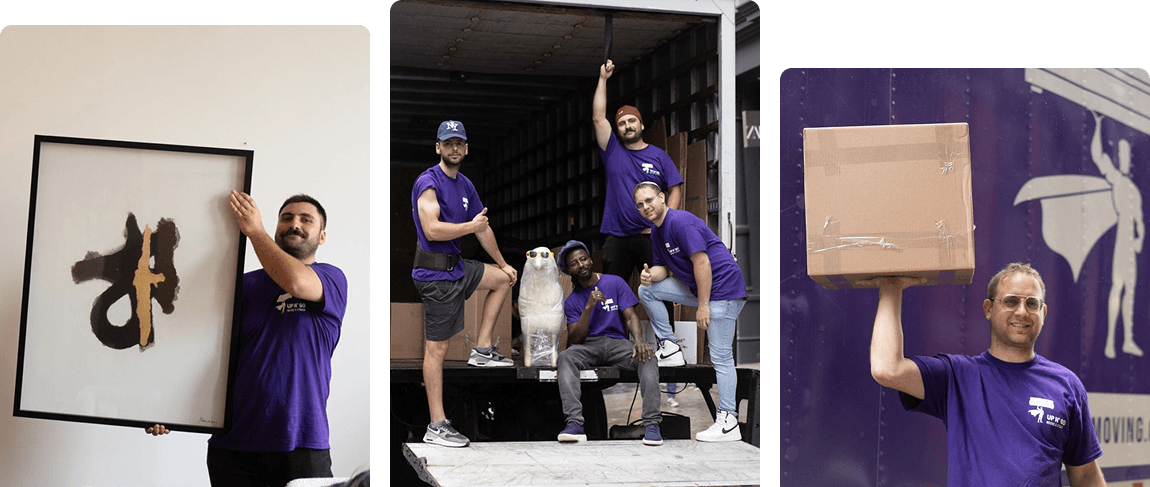
Up N Go Moving & Storage can help you with a variety of tasks
15. Final Thoughts
Moving gym equipment takes planning, strength, and patience. It\’s not just about getting it from point A to B\—it\’s about doing it safely and keeping it in good condition.
If you\’re moving within the NYC area\—or to or from New Jersey, Long Island, or beyond\—a licensed and insured moving company familiar with gym gear can make all the difference. They know how to handle the city\’s logistics, protect your home, and move heavy equipment with precision.
Whether it\’s a few dumbbells or an entire home gym, the key is preparation. Clean it, label it, protect it, and\—if possible\—let professionals handle the heavy lifting.